
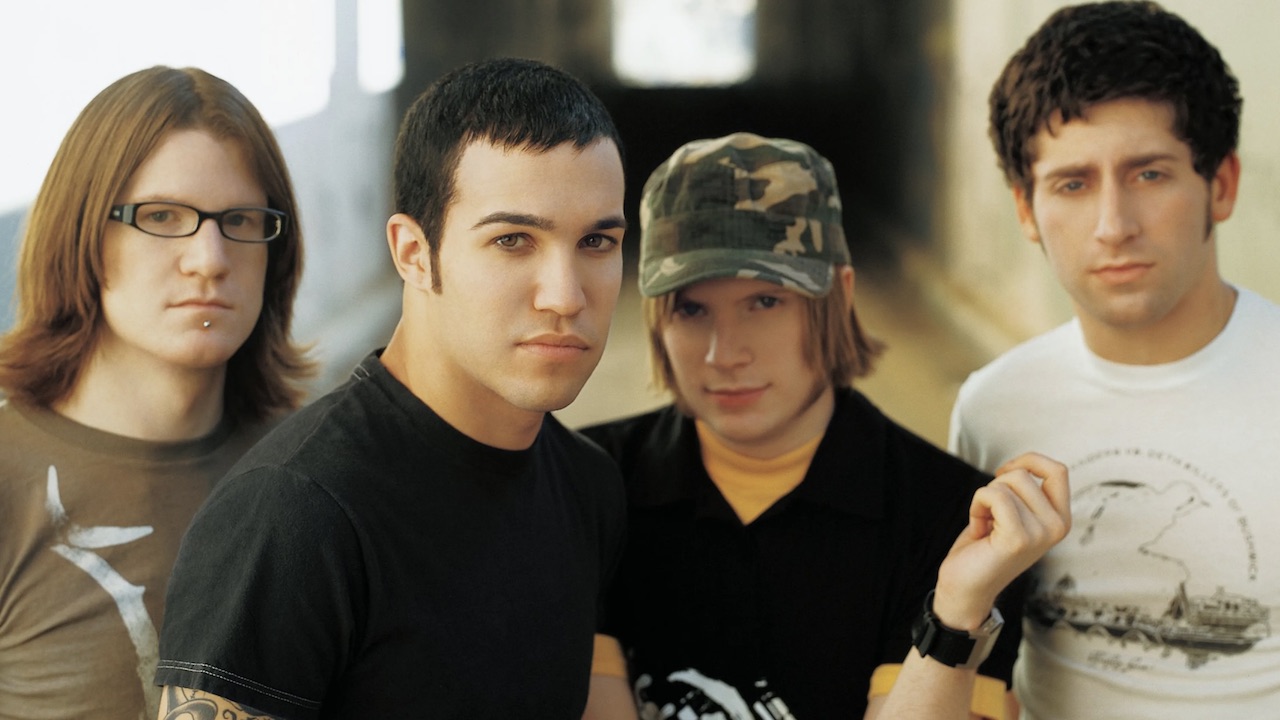
Fall Out Boy turning 25 feels less like a throwback and more like a reminder of how long they’ve stayed relevant. They’ve been around long enough to be called a legacy act, but the numbers and the way people still engage with them say otherwise.
Formed in 2001 in Wilmette, Illinois, they came out of the Chicago hardcore scene with no real expectation of becoming a global name. Pete Wentz and Joe Trohman started it as a side project, Patrick Stump joined soon after, and Andy Hurley eventually completed the lineup. Early on, it was DIY touring, small rooms, and building a following the traditional way.
Take This to Your Grave arrived in 2003 and became the album that properly put Fall Out Boy on the map. It didn’t take them mainstream overnight, but it built a dedicated fanbase through constant touring and word of mouth. Tracks like “Grand Theft Autumn / Where Is Your Boy” and “Saturday” became staples, and the band quickly grew into one of the most talked about names in the scene.
From Under the Cork Tree shifted everything again in 2005. “Sugar, We’re Goin Down” and “Dance, Dance” didn’t just push them into the mainstream, they helped define that mid 2000s era. Fall Out Boy weren’t just part of it, they were right at the centre.
What kept them there wasn’t just the hits, it was how the band worked. Pete Wentz’s lyrics were detailed and unpredictable, while Patrick Stump turned them into something direct and accessible. That balance has stayed consistent over the years.
Instead of sticking to that formula, they kept moving. Infinity on High debuted at Number 1 and showed they could scale things up without losing what made them work. Folie à Deux followed, and while it didn’t land straight away, it’s now one of the records people go back to most.
By 2009, they stepped away, and for a lot of bands from that era that would have been the end. When they came back in 2013 with Save Rock and Roll, they didn’t try to revisit the past. The sound was bigger, the approach was broader, and it felt like a band more interested in moving forward than repeating themselves.
That second run is where a lot of bands lose momentum, but Fall Out Boy didn’t really dip. American Beauty American Psycho brought some of their biggest crossover moments, Mania made it four Number 1 albums, and more recently So Much (for) Stardust showed they’re still evolving without losing what made them work. Along the way, they’ve kept showing up on major tours and festival lineups without leaning on nostalgia.
Their influence is just as noticeable. The way lyrics are written, the balance between detail and accessibility, even how bands present themselves, a lot of it links back to what Fall Out Boy were doing in the mid 2000s and how they’ve carried it forward..
Outside of their own releases, their reach has been wide. Pete Wentz helped bring through bands like Panic! At The Disco, and years later you’ve got artists like Taylor Swift referencing that era and even collaborating with the band. That kind of crossover doesn’t happen without staying relevant.
The numbers reflect that. Around 45.8 million monthly listeners across platforms, over 23 billion lead streams, and close to 100 million monthly streams. On Spotify alone, 25 million monthly listeners, 11.8 million followers, and dozens of tracks past 100 million streams.
They’re not being carried by one era either, people are still actively listening across the catalogue.
That’s what stands out. Different fans came in at different points. Some through Take This to Your Grave, others through the 2000s singles, others through the comeback years, and newer listeners are still finding them now. None of those eras replace each other, they build on!
Twenty five years in, Fall Out Boy are still part of the current conversation. And not many bands manage that, here’s to twenty five more!


