


15 years ago today, blink-182 released Neighborhoods in the UK, with the album arriving in the US the following day on September 27th. It was their first studio album in eight years, their first since reuniting in 2009 and, until ONE MORE TIME… arrived in 2023, the final blink record to feature Tom DeLonge.
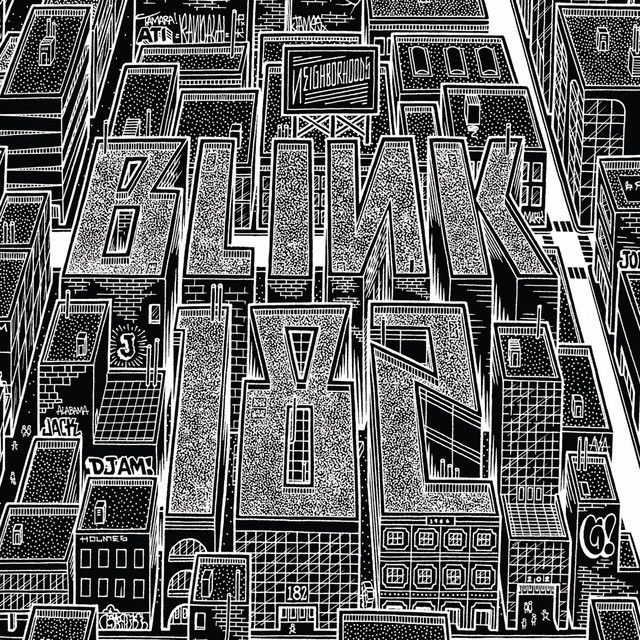
For an album carrying that much significance, Neighborhoods has always occupied a strange place in blink-182’s discography. It does not have the untouchable status of Enema Of The State or Take Off Your Pants And Jacket, and it has never received the same level of retrospective praise as the band’s 2003 self-titled album. Yet 15 years later, there is a strong argument that it has aged far better than its reputation suggests.
By the time blink began making the record, all three members had changed significantly from the band that went on hiatus in 2005. Mark Hoppus and Travis Barker had formed +44, while DeLonge had spent several years developing the much bigger, more atmospheric sound of Angels & Airwaves. Those different influences are all over Neighborhoods, and rather than attempting to recreate the blink-182 of the early 2000s, the album sounds like three musicians trying to work out what the band could become next.
That gives the record some of its strongest moments. “Ghost On The Dance Floor” and “After Midnight” lean into a darker, more expansive version of blink, while “Natives”, “Heart’s All Gone” and “Kaleidoscope” retain more of the urgency associated with their earlier material. “Wishing Well” has also become one of the album’s standout tracks over time, particularly as fans have had years to revisit the record without the enormous expectations that surrounded the reunion.
The way Neighborhoods was made undoubtedly shaped how it sounded. Following the death of longtime producer Jerry Finn, blink-182 largely produced the record themselves, while DeLonge frequently recorded separately from Hoppus and Barker. Material was passed between studios rather than the whole band consistently writing and recording together, something the members themselves later acknowledged had contributed to the fragmented nature of the sessions.
That lack of unity can still be heard across parts of the album, but it is also one of the reasons Neighborhoods remains such an interesting record. At times it feels like blink-182, +44 and Angels & Airwaves are all fighting for space on the same album, resulting in something noticeably darker and less straightforward than what had come before. It may not always feel completely cohesive, but it rarely sounds like the band were simply repeating themselves.
The reaction to Neighborhoods was not as negative as its reputation sometimes suggests either. The album received generally favourable reviews on release and performed strongly commercially, reaching Number 6 on the UK Albums Chart and topping the UK Rock & Metal Albums Chart. The bigger issue may simply be that it followed some of the most important and popular albums of blink-182’s career, leaving it with an almost impossible standard to match.
There is also something about Neighborhoods that makes more sense with hindsight. In 2011, fans were hearing a band return after years apart and expecting the next chapter of blink-182. Looking back now, it feels more like a snapshot of three musicians who had grown apart musically attempting to find common ground again, and that tension gives the album an identity completely unlike anything else in their catalogue.
It is unlikely to replace Enema Of The State, Take Off Your Pants And Jacket or the self-titled record at the top of many fans’ lists, but perhaps that is not really the point. Fifteen years later, Neighborhoods has enough brilliant songs, interesting ideas and its own distinct atmosphere to deserve far more attention than it often gets.
So, is Neighborhoods blink-182’s most slept on album? There is certainly a case for it..